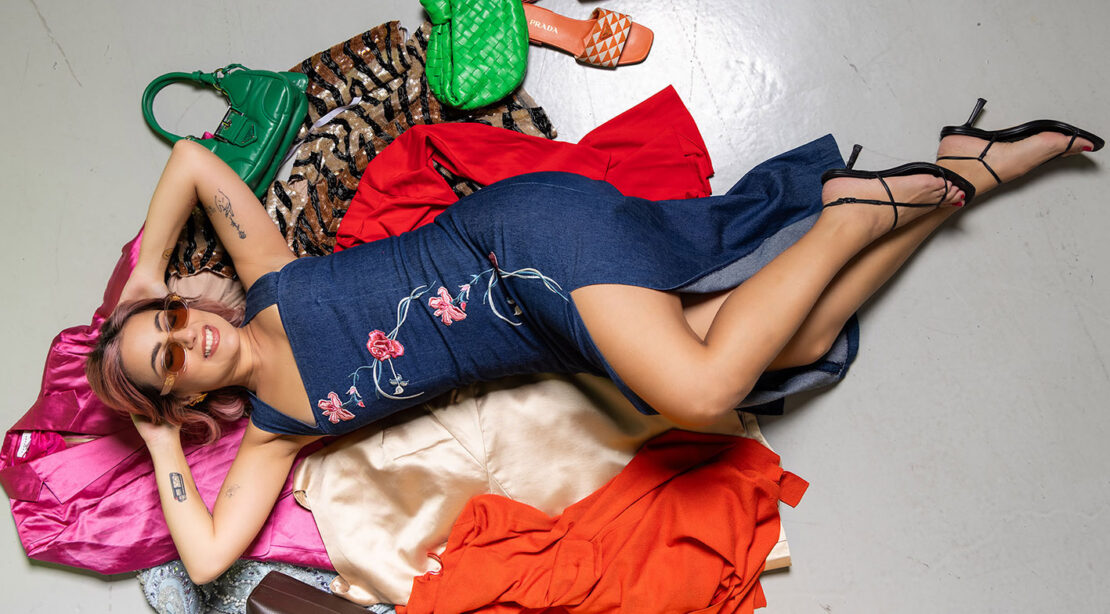
Roanne El Alaili is making a case for what already exists in an industry loudly built around what’s new. As the Founder of &Again, a UAE-based preloved fashion platform, she is part of a growing movement that is reshaping the way people think about shopping.
While resale has steadily gained traction across global markets, the Middle East is still at the beginning of that journey. Consumer attitudes are evolving, particularly among younger generations, yet buying secondhand is still considered a secondary option instead of the natural starting point. Changing that perception, she believes, is both the industry’s biggest challenge and its greatest opportunity.
Her ambition extends beyond building a successful business. She wants to change the way people think about ownership, value, and fashion itself. “My dream is for preloved to become the first choice, not the alternative,” she says. “I want future generations to look at buying everything brand new the way we look at excessive plastic use today—something that just doesn’t make sense anymore.” It is an ambitious vision, but one that has been years in the making.
Where It All Began
Long before sustainability became central to conversations around fashion, El Alaili’s relationship with clothing had already been shaped by a different perspective. Some of her earliest memories involve exploring her mother’s wardrobe, not because she wanted something new, but because she enjoyed discovering pieces that already had a story behind them.
That fascination stayed with her as she built a career in fashion and luxury, spending nearly two decades working in an industry she genuinely loved. The creativity, craftsmanship and innovation were everything she had imagined. Still, over time she also became increasingly aware of another reality—the sheer amount of clothing that remained unworn despite its quality and value. Beautiful garments sat untouched in wardrobes while new collections continued to arrive season after season. The more she observed that cycle, the harder it became to ignore the question that would eventually define her next chapter.
“Why are we producing more when so much already exists?” She couldn’t shake the question. Instead, it became the starting point for exploring what a different system could look like. That idea eventually became &Again.
More Than a Marketplace
Although &Again operates as a resale platform, El Alaili is careful not to define it purely as a marketplace. In her view, the business is less about selling clothes and more about encouraging a different way of thinking. “When I started, I thought I was building a resale platform. I definitely underestimated what an undertaking it would be.”
Over time, she realised is that changing shopping habits is far more complex than building technology. It requires changing perceptions that have existed for decades, particularly in a region where luxury shopping has long been associated with buying brand new.
She believes the future won’t belong exclusively to either traditional retail or resale, and that consumers will increasingly move between both, choosing whichever option best suits their needs. “I genuinely believe recommerce will become part of everyday shopping behaviour,” she said. “You’ll buy new, you’ll buy preloved, you’ll rent, you’ll resell. It’ll all exist together.”
She believes younger consumers are already driving that transition. They are beginning to measure value differently, placing greater importance on individuality, quality, and impact alongside price. “Why spend AED 1,000 on something new when you can find something cooler, more unique, and often better quality for a fraction of the price?” It is a shift she believes will gradually redefine what smart shopping looks like.
Making Conscious Shopping Enjoyable
While sustainability often comes with messaging centred on sacrifice and responsibility, El Alaili approaches the conversation from a different angle. She believes conscious shopping is far more likely to become a lasting habit when it feels enjoyable instead of restrictive. “I want people to feel good,” she said. “Good about making money from things they no longer use, good about seeing those items have a new life with someone else, and good about shopping more consciously.”
Fashion, she explains, has always been deeply personal. It allows people to express themselves, build confidence and communicate identity, which is why she believes sustainability should never feel like it takes something away from that experience. “I don’t think sustainability should feel restrictive or boring. I want people to discover that living more consciously can actually be more fun.”
That sense of enjoyment is perhaps best reflected in what she loves most about preloved shopping itself. To El Alaili, shopping preloved is about far more than practicality. She describes it as a treasure hunt, where every discovery carries its own story. “You never know what you’re going to find,” she said. “A vintage designer piece, something that reminds you of your childhood, or a dress that somehow feels like it was waiting specifically for you.”
Those unexpected discoveries are what continue to make preloved shopping so compelling. Every purchase carries a history, giving each piece the opportunity to begin a new chapter with someone else.
Building a Different Kind of Business
Like many entrepreneurs, El Alaili speaks openly about the realities of building a company from the ground up. She admits there are difficult periods that test both confidence and patience, particularly when the goal is not simply to launch a product but to influence consumer behaviour.
“I’m a founder, so there are challenging periods every week,” she said. “There are days I feel like giving up, but then I get a good night’s sleep and focus back on the vision and the dream.”
Despite those inevitable challenges, she believes the company’s growth and its environmental mission should never be treated as separate objectives. The larger &Again becomes, the more clothing remains in circulation, the more wardrobes are decluttered, and the fewer usable items end up as waste.
Growth, she insists, only matters if it continues to serve the purpose that inspired the company in the first place. “If we ever lost sight of why we started, then we’d just be another marketplace. The mission has to stay bigger than the metrics.”
Looking Beyond Resale
Ask El Alaili what &Again could become if resources were unlimited, and the conversation quickly expands beyond an app. She imagines physical experience spaces, repair and restoration services, textile recycling labs, educational programmes in schools, AI-powered tools that make resale effortless, and collaborations that make circular fashion part of everyday life. She even jokes about creating an “&Again travelling shopping bus” that would bring the resale experience directly into communities.
Behind those ideas is a much larger ambition: creating an ecosystem where every garment has the opportunity to live a second, third or even fourth life instead of ending its journey with a single owner. Her definition of success reflects that long-term mindset. It has little to do with valuation, acquisitions or financial milestones. “The moment I see people automatically check preloved before buying new, I’ll know we’ve won.”
To her, that moment would represent far more than business success. It would signal a genuine cultural shift, where buying preloved no longer feels like an alternative but simply another way people choose to shop. Ultimately, her motivation is also deeply personal. As the mother of a young daughter, she often thinks about the world the next generation will inherit and the habits they will consider normal.
“I want my daughter to grow up in a world where shopping consciously feels completely normal,” she said. “I’m already teaching her to always think more consciously and be mindful.” It is a simple hope, but one that captures the philosophy behind everything she is building.
In an industry that has long celebrated what comes next, El Alaili believes the future of fashion may depend just as much on what is already here and whether we are willing to see its value all over again.